“Our Name Is Our Mission” — A Reflection on Being a Divine Word Missionary

Author: Wojciech Szypula, SVD
Subject: Biblical Apostolate
Language: English, Spanish
Publisher: VivatDeus.org
Year: 2026

“We have the prophetic word more fully confirmed, to which you will do well to pay attention as to a lamp shining in a dark place…”
(2 Peter 1:19)

Every so often, it is worth pausing and asking a simple but demanding question: Who are we, really?
For us, as members of the Society of the Divine Word, the answer is hidden in plain sight — in our very name.

“Our Name Is Our Mission.” This phrase, affirmed by the XVIII General Chapter, is not a slogan. It is a reminder, and perhaps even a quiet challenge. It tells us that before we do anything, before we plan or organize or evaluate, we are first called to belong — to the Divine Word, Jesus Christ, who calls us and sends us.

Our identity does not begin with our activities, our skills, or even our ministries. It begins with a relationship. Rooted in the Word made flesh, we discover not only the meaning of our mission, but the meaning of our own lives. When that relationship is alive, mission flows naturally; when it weakens, everything else becomes fragile.

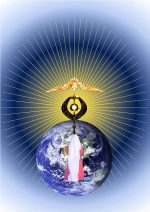
The world we are sent into is wounded, fragmented, and often overwhelmed by darkness. Yet the light we bring is not something we generate ourselves. We are not the source. At best, we are mirrors, fragile and imperfect, reflecting a light that comes from elsewhere. “Our light” is simply the way we choose to focus that divine light — through our decisions, our priorities, and the places where we allow the Word to shape us.

This realization is both humbling and liberating. It frees us from the illusion that everything depends on us, while calling us to deep responsibility: Where do I choose to reflect the light of the Word? What parts of my life remain in shadow?

Again and again, Scripture reminds us that the Word of God is not passive. It heals. It restores. It brings together what has been broken apart. When we truly allow the Word to dwell within us, it does not leave us unchanged. It touches our wounds, reshapes our hearts, and gradually forms us into witnesses — not perfect ones, but authentic ones.

Our mission, then, flows from intimacy. From a lived union with Jesus Christ, the Word incarnate. This union is not primarily intellectual, although study has its place. It is something we live, struggle with, return to, and grow into over time. Every dimension of our missionary life — dialogue, justice, communication, animation — is meaningful only insofar as it springs from this inner connection to the Word.

A privileged space where this relationship deepens is Sacred Scripture. The Bible is not simply a text we explain to others; it is a place where God speaks to us. Just as Christ is God’s Word clothed in human flesh, Scripture is God’s Word clothed in human language. When we read it prayerfully, we allow ourselves to be shaped, corrected, and sent anew.

“Our Name Shapes Our Life” — Living from the Word

“Creative missionary activities are born of love for the Word of God.”
(Pope Francis)

If the Word truly defines who we are, then it must also shape how we live — from the inside out.

A genuine life as a Divine Word Missionary is not sustained by activity alone. It requires an interior life that is nourished by Scripture and supported by community. This happens on two inseparable levels: the spiritual and the intellectual.

Spiritually, the Word becomes real for us through prayerful practices: meditation, Bible sharing, retreats, and quiet listening. These moments are not luxuries reserved for free time; they are necessities. Without them, we risk speaking about the Word without truly speaking from it.

Intellectually, we are called to take Scripture seriously — to study it with care, humility, and fidelity to the Church’s tradition. Understanding the Bible within the living faith of the Church protects us from reducing it to personal opinion or isolated interpretation. Formation, both initial and ongoing, becomes a lifelong commitment to letting the Word continue to challenge and expand us.

At every stage of life, we need structures and leadership that help keep this commitment alive — not as an obligation, but as a shared responsibility for our vocation.

“Our Name Defines Our Mission” — A Call to the Biblical Apostolate

“Think SVD, think Biblical Apostolate.”
(Paulus Budi Kleden, SVD)

All of this finds its most visible expression in the Biblical Apostolate. This is where our identity touches the concrete realities of people’s lives. It is where the Word becomes accessible, familiar, and loved.

Biblical Apostolate is not a task for specialists alone. It belongs to all of us. Whatever our specific ministry, the Word of God should remain close to the center — shaping how we preach, teach, accompany, communicate, and serve.

This is why the Biblical Apostolate cannot depend only on personal enthusiasm. It needs intention, structure, planning, and support. Appointing coordinators, allocating resources, and committing personnel are not bureaucratic decisions; they are spiritual choices that reveal what we truly value.

When we give priority to the Biblical Apostolate, we say — with our lives, not just our words — that our name still matters. That being missionaries of the Divine Word is not a title we carry, but a reality we strive to live.

In renewing this commitment, we allow ourselves to be sent again — shaped by the Word, healed by the Word, and entrusted with the humble task of reflecting its light in the world today.

Questions for Reflection

  1. When I hear the words “Our Name Is Our Mission,” what do they awaken in me personally — gratitude, resistance, hope, or questions?
  2. How alive is my relationship with the Divine Word at this moment of my life?
  3. In what ways do I allow the Word of God to shape my daily decisions, attitudes, and relationships — not only my ministry?
  4. The light we reflect is not our own.
    Where in my life do I consciously try to control the light, and where do I allow myself to simply reflect it?
  5. How does Sacred Scripture function in my life today: as a text I explain, or as a space where I allow God to speak to me?
  6. Which practices help me most to remain spiritually united with the Word?
  7. How do I continue to grow intellectually in my understanding of Scripture?
    What might the Word be inviting me to study, relearn, or question more deeply?
  8. In my current ministry, how visible is the Word of God?
    If someone looked at my work, would they recognize the Biblical Apostolate as part of it?
  9. What concrete step — however small — is the Word inviting me to take now in order to live my vocation more faithfully?
  10. Where do I sense the Spirit calling me to let the Word heal, challenge, or transform me anew?

_____________

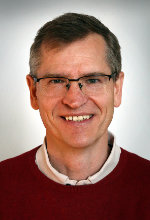
Wojciech Szypula, SVD

Wojciech Szypula, Coordinator of the Biblical Apostolate in the Society of the Divine Word

Leave a Reply

Your email address will not be published. Required fields are marked *

EN